
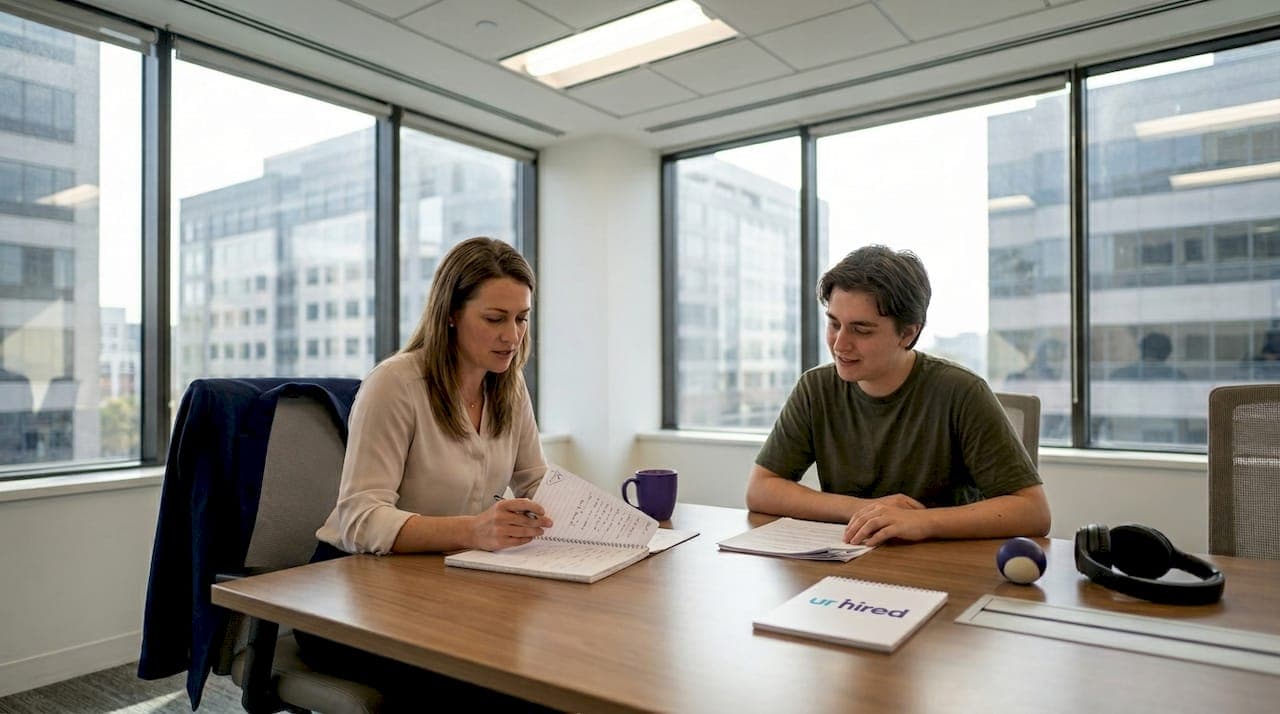
Designing interviews that are genuinely fair for neurodivergent candidates is one of the most pressing challenges facing HR teams today. Many skilled applicants, including those with autism, ADHD, dyslexia, and dyspraxia, are screened out not because of a lack of ability, but because the process itself creates unnecessary barriers. The good news is that targeted, evidence-based adjustments can make a measurable difference. This article outlines the key criteria, practical ideas, and comparison tools you need to build an interview process that works for everyone.
Table of Contents
- Defining criteria for inclusive interview practices
- Practical ideas for adjusting interview formats
- Environmental and process adjustments
- Comparison of popular inclusive practice ideas
- Why standardised interviewing isn't always fair—what most HR teams miss
- Take the next step towards truly inclusive hiring
- Frequently asked questions
Key Takeaways
| Point | Details |
|---|---|
| Flexibility is essential | Adapting interview formats and environments increases equity and boosts candidate performance. |
| Evidence backs inclusion | Research shows neurodivergent candidates thrive and improve retention when best practices are used. |
| Continuous learning matters | Regular training and feedback help hiring teams stay responsive to evolving inclusive practices. |
Defining criteria for inclusive interview practices
An inclusive interview is one that actively removes barriers preventing neurodivergent applicants from demonstrating their true capabilities. Neurodivergence covers a wide spectrum, including autism spectrum disorder (ASD), attention deficit hyperactivity disorder (ADHD), dyslexia, dyspraxia, dyscalculia, and Tourette syndrome. Each condition brings distinct strengths and distinct challenges in traditional interview settings.
To be genuinely inclusive, an interview process should meet four core criteria:
- Clarity: Instructions, questions, and expectations are communicated without ambiguity.
- Flexibility: Candidates can choose formats that allow them to perform at their best.
- Transparency: Candidates know what to expect before, during, and after the interview.
- Alternative formats: Written responses, task-based assessments, and assistive technology are available.
Research confirms that these adjustments are not merely symbolic. Neurodiversity training and clear disclosure policies can make hiring outcomes for autistic candidates equal to neurotypical peers, with effects persisting two months after training. That is a significant, lasting result from relatively straightforward organisational changes.
Building these criteria into your process from the outset is far more effective than retrofitting adjustments later. Investing in inclusive hiring training equips your team with the knowledge to apply these principles consistently.
Pro Tip: Review and update your interview protocols at least once a year. Best practices in neurodiversity-inclusive hiring continue to evolve, and regular reviews ensure your process stays effective and legally sound.
Practical ideas for adjusting interview formats
Once you have your criteria in place, the next step is translating them into concrete adjustments. The goal is to give every candidate a fair opportunity to show what they can do, regardless of how they communicate or process information.
Here are some of the most effective format adjustments:
- Pre-supplied questions: Send interview questions to candidates 24 to 48 hours in advance, reducing anxiety and allowing for more considered responses.
- Skill demonstration tasks: Replace or supplement verbal questions with practical tasks that reflect real job requirements.
- Alternative communication methods: Allow written responses, typed answers, or the use of assistive technology during the interview.
- Flexible timing: Offer extended time or scheduled breaks to reduce cognitive overload.
- One-to-one formats: Where possible, offer a one-to-one interview rather than a panel, which can feel overwhelming for some neurodivergent candidates.
These are not concessions. They are tools for accuracy. When candidates are placed in roles that suit their strengths, neurodivergent employees show 30 to 140% higher productivity, particularly in areas such as pattern recognition and quality assurance.
To make this work in practice, always ask candidates directly what format they prefer. You can do this at the application stage through an inclusive job spec, which signals your commitment to accessibility from the very first touchpoint.
Pro Tip: A simple one-line question on your application form, asking whether the candidate requires any adjustments, can significantly increase disclosure rates and help you prepare effectively.
Environmental and process adjustments
Beyond changing questions and formats, the setting itself must support neurodivergent candidates. Even a well-designed question set can fall flat if the physical or virtual environment is overwhelming.
Here are the key steps to creating an accessible interview environment:
- Control lighting: Avoid harsh fluorescent lighting where possible. Natural or warm lighting is less likely to cause sensory discomfort.
- Minimise background noise: Choose a quiet room or, for remote interviews, advise interviewers to use a neutral background and mute notifications.
- Allow sensory aids: Permit candidates to use fidget tools, noise-cancelling headphones, or other sensory supports during the interview.
- Share the agenda in advance: Send a clear outline of the interview structure, including who will be present, how long it will last, and what topics will be covered.
- Confirm logistics clearly: For in-person interviews, provide step-by-step directions and details about parking, building access, and reception procedures.
For remote interviews, test the technology in advance and offer a brief orientation call so candidates are comfortable with the platform before the interview begins.
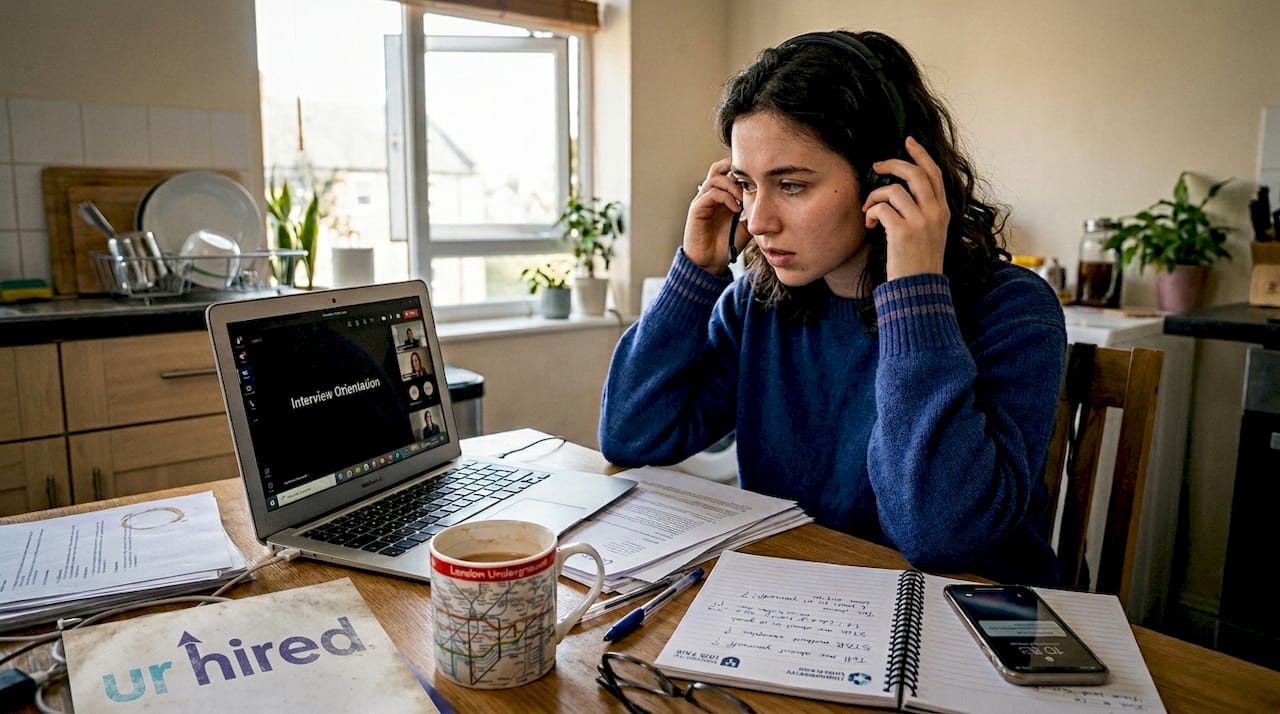
The business case for these adjustments is well established. As research highlights, companies such as Microsoft and SAP report retention rates above 90% among neurodivergent employees when the right support structures are in place. Transparent, well-structured processes are a core part of that support. Organisations working with our universities programme have found that embedding these practices early, at the graduate recruitment stage, produces lasting results.
Comparison of popular inclusive practice ideas
After exploring individual strategies, a side-by-side comparison helps you choose the right combination for your organisation.
| Practice | Pros | Challenges | Best-fit scenario |
|---|---|---|---|
| Advanced question disclosure | Reduces anxiety, fairer assessment | Requires planning ahead | All interview types |
| Skill demonstration tasks | Shows real ability, job-relevant | Needs task design investment | Technical or specialist roles |
| Sensory-friendly rooms | Reduces overwhelm, supports focus | Requires physical setup | In-person interviews |
| Pre-assessment information pack | Sets clear expectations, builds trust | Adds preparation time | All candidates, especially ASD |
| One-to-one format | Less intimidating, clearer dialogue | Not always scalable | Early-stage screening |
When choosing which practices to implement, consider the following:
- Start with disclosure: Creating a safe space for candidates to share their needs is the foundation of every other adjustment.
- Layer your approach: Combining two or three practices is more effective than relying on a single change.
- Track your outcomes: Monitor offer rates, retention, and performance data to measure impact over time.
The evidence supports a long-term view. Equal hiring likelihood for neurodivergent candidates persists months after training and process changes are introduced. For further reading on what works in practice, the URHired blog features expert discussions and case study evidence.
Why standardised interviewing isn't always fair—what most HR teams miss
There is a common assumption in HR that a standardised process is an equitable one. Apply the same questions, the same time limits, the same room to every candidate, and you have created fairness. In practice, this logic has a significant flaw.
Standardisation removes explicit bias, but it does not remove structural barriers. A candidate with ADHD who struggles to retrieve information under time pressure is not less capable than a neurotypical peer. They are simply being assessed in a format that does not reflect their ability.
We have seen this play out repeatedly. Candidates who were passed over in traditional panel interviews went on to excel once a skill-based task or written format was offered. The role did not change. The person did not change. The process did.
Customising your interview process is not a compromise on standards. It is a more accurate way of measuring them. Reviewing case study evidence from organisations that have piloted flexible formats consistently shows improved retention and performance outcomes. The willingness to adapt is what separates a fair process from one that merely appears fair.
Take the next step towards truly inclusive hiring
Building an inclusive interview process takes commitment, but you do not have to start from scratch.
URHired offers tailored interview packages designed specifically for organisations ready to embed neurodiversity-inclusive practices at every stage of recruitment. Whether you are looking to register for inclusive job spec access or explore the full inclusive hiring suite, we have the tools and expertise to support your team. Book a Discovery Call today and take the first practical step towards a process that works for every candidate.
Frequently asked questions
Which interview adjustments most benefit neurodivergent candidates?
Providing questions in advance, offering flexible formats, and creating sensory-friendly settings are consistently effective. Research confirms that training and disclosure policies can equalise hiring outcomes for neurodivergent and neurotypical candidates.
How does neurodiversity impact retention and performance?
Neurodivergent employees placed in well-matched roles can achieve retention rates above 90% and show significantly higher productivity, particularly in detail-focused and pattern-recognition tasks.
What's the biggest mistake HR makes with inclusive interviewing?
Relying on rigid, one-size-fits-all interviews often excludes neurodivergent talent and reduces overall fairness, even when that is not the intention.
Do inclusive practices help all candidates, not only neurodivergent ones?
Yes. Clearer processes, advance information, and flexible formats improve the experience for all applicants, not just those who are neurodivergent.